
Posting Christmas Gifts: Packaging Materials That Work
Every December, parcels pile up in sorting offices, and a fair few of the gifts inside arrive cracked or crushed. Bad luck is rarely the cause. More often, the gift and its wrapping simply weren’t matched.
The right packaging materials depend on three things: how fragile the item is, how rough the journey will be, and how you want it to look when it’s opened. Get those right, and a parcel sent from Leeds to Edinburgh will land in one piece. Here’s how to match the protection to the present.
How Do You Protect Fragile Gifts in the Post?
Wrap the gift itself in cushioning, place it in a sturdy cardboard box with a few centimetres of space on every side, and fill every gap so that nothing can move. Seal the box securely along all seams. If the gift shifts when you shake the closed parcel, it needs more filler.
Most breakages are caused by movement rather than a single dramatic drop. A gift that slides inside its box builds up speed, then meets a cardboard wall at full tilt. Stopping that slide matters more than adding padding to one side.
Start with the item, not the box.
Wrap the gift before it goes anywhere near the carton. Bubble wrap in rolls is the easiest way to do this, because you can cut the exact length you need and take a mug or candle jar round two or three times. Pre-cut sheets never quite fit. Fix the end of the wrap so it can’t unravel, then check for sharp corners poking through.
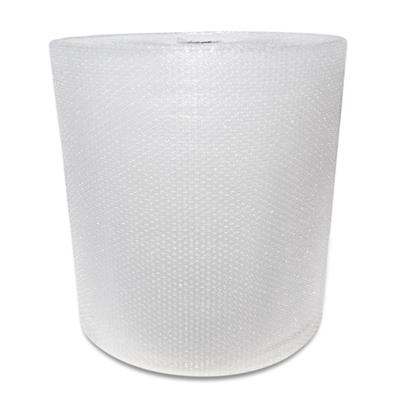
Cushion all six sides.
A box has six faces, and a gift needs a buffer against each one. Aim for roughly 3cm to 5cm of space around the wrapped item, then fill it. “Void fill” is any soft material that stops a gift from moving inside its box. Scrunched sheets torn from a kraft paper roll do the job nicely, and the recipient can usually drop them straight into their paper recycling afterwards.

Paper has limits, though. It won’t absorb a hard knock on a heavy item, so keep bubble film or foam close to the gift and use paper for the gaps.
Run the shake test.
Before you seal the parcel for good, try this:
- Close the flaps without sealing them.
- Hold the box in both hands and give it a gentle shake.
- Listen and feel for any rattle or shift.
- Add filler until the box feels like one solid block.
It takes thirty seconds and catches the commonest mistake: a box that’s simply too big. If you can’t keep the gift in place, consider switching to a smaller box instead of adding another layer.
Do it for every parcel, not just the precious ones. A £5 stocking filler can break as easily as a £50 present, and the person opening it won’t care about the price tag.
Which Material Suits Which Gift?
Match the material to the gift’s weak point. Glass, ceramic and candle jars need air-cushioned bubble film. Polished or lacquered surfaces do better with soft foam against the finish. Books, clothes and other sturdy items need little more than paper, corrugated paper or a mailing bag.
No single option covers every present. Different packaging materials solve different problems, and the trick is knowing which problem you actually have.
Glass, ceramics and candles
These break on impact and chip on contact, so they need cushioning that absorbs a knock. Wrap each piece separately, because two mugs wrapped together will happily chip each other. A £30 candle in a glass jar deserves two or three layers of bubble film and a snug box.
Frames, polished wood and boxed gadgets
Here the enemy is scuffing as much as breaking. Hard bubbles pressed against a soft or freshly finished surface can leave an imprint, which is where jiffy foam rolls earn their place. One wrap of foam against the surface, then bubble film over the top, protects the finish and the corners. For a framed print, add flat sheets of corrugated paper either side of the glass.

Clothes, books and soft gifts
A knitted jumper doesn’t need cushioning, just protection from dampness and rips. A mailing bag usually does the job and weighs less than a box. Books are different: their corners dent easily, so wrap them in corrugated paper and choose a box that fits them closely.
Mailing bags suit soft items only, though most also help keep the rain off a jumper heading for a wet week in Manchester or Glasgow. Anything with a sharp edge or a breakable centre should be placed in a box.
Can You Make Protective Wrapping Look Festive?
Yes. Plain brown kraft paper takes ribbon, twine and hand-drawn decoration well, so the wrapping layer can double as the gift wrap. Put the cushioning around the gift first, then wrap the paper over it, so the finished parcel looks considered without adding bulk.
Kraft paper is a strong, unbleached paper made from wood pulp, which is why it survives a postal journey and still takes decoration well. A single roll of kraft paper can cover a stack of gifts at Christmas, leaving enough for the outer layer of a parcel.
Layer the paper over the protection.
Cushion first, paper second. Wrap the bubble film or foam around the gift, then bring the kraft paper over the top with neat folds and the seam on the underside. The result looks tidy, and the paper never has to do the protecting.
Dress it for the occasion.
Plain brown paper suits nearly every occasion. Red twine and a sprig of rosemary say family Christmas. White ribbon suits a keepsake or a wedding present, and a single ribbon in the couple’s colours looks smarter than a handful of bows.
A handwritten tag works for a secret Santa gift and costs nothing. Keep decorations light, since heavy trimmings add bulk and can snag in transit.
Is More Bubble Wrap Always Better?
No. Extra bubble wrap inside an oversized box still lets the gift slide, and it adds weight, cost and waste. The aim is a snug fit: gift-wrapped, the box slightly larger, gaps filled. Two excellent layers in the right-sized box beat ten layers in the wrong one.
Buying bubble wrap in rolls makes overwrapping simple, because there’s always another meter to tear off. Resist it. Wrap until you can’t easily press the item’s edges through the layers, then stop and think about the box instead.
Foam is worth considering when weighing surface matter. It’s thinner and lighter than a bulky wad of bubbles, and for a lacquered jewellery box, jiffy foam rolls may protect the finish better. They aren’t a cure-all, though. A delicate glass bauble still needs proper bubble cushioning and a rigid box, because foam alone is too thin to absorb a hard knock.
Then there’s the box itself. No amount of wrap can rescue a gift in a tired, dented carton. Reusing a box is perfectly sensible if it’s rigid and dry, but a soft or crushed corner is the end of its postal life.
Frequently Asked Questions
- Is kraft paper enough to protect a gift on its own?
For sturdy items like books, clothing or boxed toys, yes. Crumpled paper from a kraft paper roll fills gaps and softens small knocks. For glass, ceramics or anything with a delicate finish, it isn’t enough on its own, and you’ll want bubble film or foam against the item itself.
- How much bubble wrap do I need for one gift?
As a rough guide, use two to three turns of bubble wrap around a small breakable item, such as a mug or candle jar, and ensure there is enough wrap to cover every face of a larger item. Cutting from bubble wrap in rolls lets you take exactly what you need. If you can press the item’s outline easily through the wrap, add another turn.
- What should I use for a framed picture or polished wooden gift?
Use something soft against the surface, then add rigidity around it. Jiffy foam rolls work well as the first layer because they’re gentle on a finish. Follow with corrugated paper over the glass or front face, then a snug box. Add extra protection at the corners, since frames take most knocks there.
- When should I post Christmas gifts?
Royal Mail publishes recommended last posting dates each year, and they vary by service, so check them before you wrap anything. Aim to post at least a week earlier than the date that applies to you, especially if the recipient lives somewhere remote. Posting early also means a calmer packing session.
Summing up
To sum up, a good Christmas parcels start with a match, not a pile of padding. Pick the material for the gift’s weak point, wrap the item first, fill every gap, and run the shake test before you seal anything.
Choosing the right packaging materials for each present takes barely more effort than guessing, and it spares someone a cracked gift. Protect first, decorate second, and post early. That’s how a gift arrives looking exactly the way you pictured it.