
Dental Instruments Names List: Essential Tools for Modern Dentistry
A comprehensive dental instruments names list helps dentists, dental assistants, clinics, and students understand the essential tools used in examination, diagnosis, treatment, restoration, and oral surgery. Each dental instruments is designed for a specific purpose, from examining teeth and gums to removing deposits, placing restorative materials, and performing precise dental procedures. Knowing the names and functions of these instruments makes it easier to select the appropriate tool for every clinical situation.
Basic Examination Instruments
Common instruments found in a dental clinic include mouth mirrors, explorers, periodontal probes, cotton pliers, and dental tweezers. A mouth mirror provides indirect vision and helps retract the cheek, lips, or tongue. Explorers assist in detecting irregularities on tooth surfaces, while periodontal probes are used to evaluate gum pockets and periodontal conditions. These basic tools form an important part of any dental instruments names list because they are frequently used during routine examinations.
Restorative Dental Instruments
Restorative procedures require specialized tools for preparing teeth and placing filling materials. Excavators, condensers, carvers, burnishers, and composite placement instruments are commonly used during restorative treatments. These tools allow dental professionals to remove affected material, shape restorations, and achieve accurate finishing. High-quality instruments can provide better handling, precision, and control, making restorative procedures more efficient and comfortable for both professionals and patients.
Periodontal and Hygiene Instruments
Dental hygiene procedures commonly involve scalers, curettes, periodontal probes, and polishing instruments. Scalers are designed to remove calculus and deposits from tooth surfaces, while curettes are used for periodontal cleaning and root surface procedures. Including these instruments in a dental instruments names list is useful for dental professionals who want to organize their equipment according to specific clinical applications. Proper instrument selection can support effective cleaning and professional oral care.
Oral Surgery Instruments
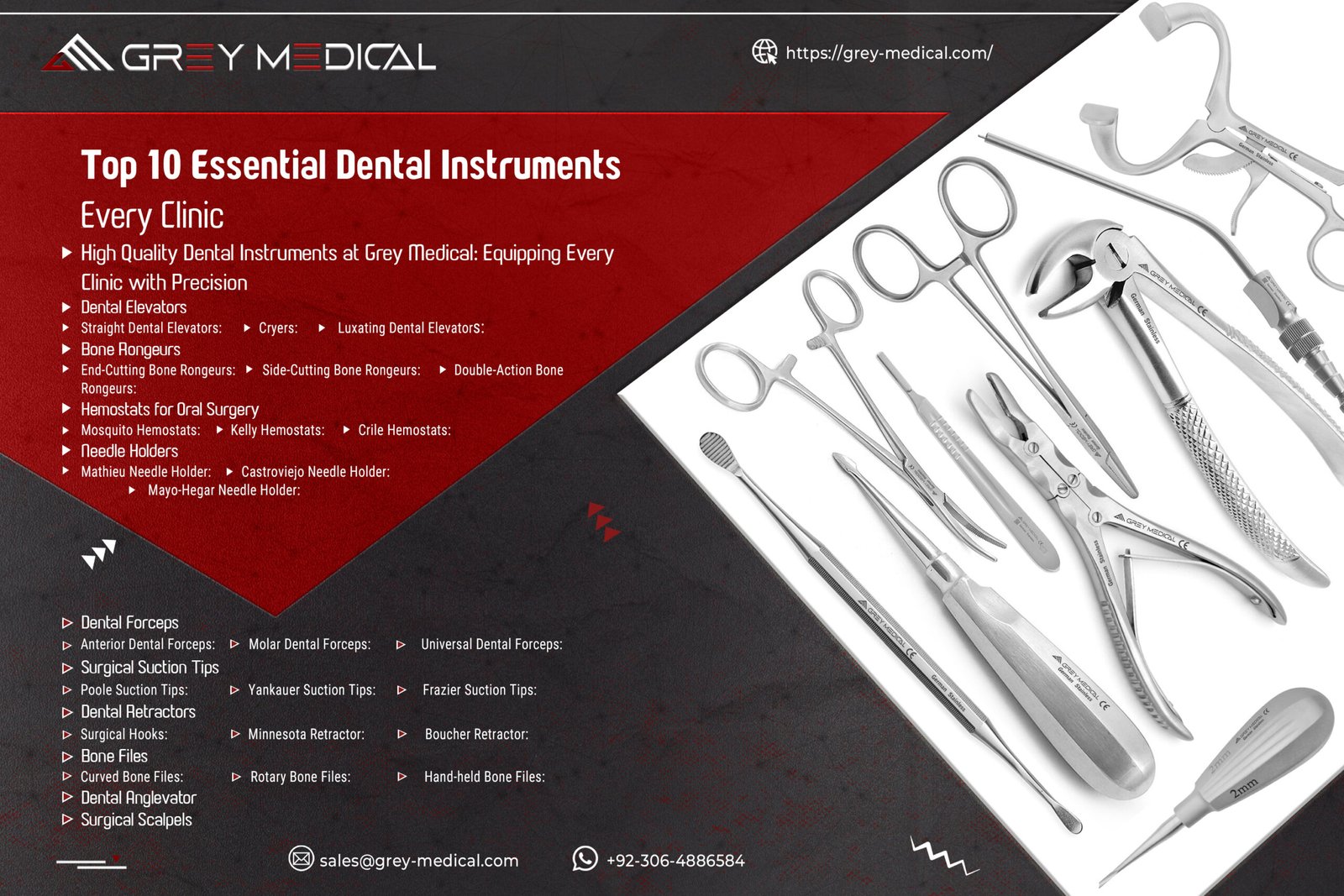
Oral and maxillofacial procedures require instruments designed for controlled cutting, extraction, grasping, retracting, and tissue management. Extraction forceps, elevators, surgical scissors, tissue forceps, needle holders, retractors, and surgical curettes are among the commonly used tools. Different designs and working ends allow clinicians to perform procedures with greater precision. A detailed dental instruments names list can help clinics identify the equipment required for different surgical applications and maintain an organized instrument inventory.
Orthodontic and Specialized Instruments
Orthodontic treatment uses specialized instruments such as distal end cutters, ligature cutters, bracket positioning instruments, archwire cutters, and orthodontic pliers. These tools are designed to assist with braces, wires, brackets, and other orthodontic components. Other specialized dental fields may require endodontic files, rubber dam instruments, implantology tools, and prosthodontic instruments. Understanding the different categories makes a dental instruments names list more useful for purchasing, training, and clinical organization.
Quality Dental Instruments for Professional Use
Choosing dependable instruments is important for dental practices that prioritize precision, durability, and consistent performance. Stainless-steel construction, ergonomic designs, accurate finishing, and appropriate manufacturing standards can contribute to reliable clinical use. GreyMedical®️ is a privately owned medical technology company dedicated to innovation and excellence in the craft of surgical instruments. Its commitment to quality supports professionals seeking dependable instruments for demanding medical and dental applications.
Conclusion
A well-organized dental instruments names list provides a practical reference for identifying tools used across examination, hygiene, restorative dentistry, orthodontics, and oral surgery. Understanding instrument names and their applications can help dental professionals manage equipment efficiently and select suitable tools for different procedures. Whether establishing a new dental clinic or updating an existing instrument collection, knowledge of essential dental instruments can support better organization and professional workflow.